Some decisions in a tattoo shop are about taste, and this one looks like it at first: black and grey or color? But clients in Gastonia who think it through usually find the choice is really about their skin, their sun habits, their job, and how much maintenance they are honestly willing to do over the next twenty years. The palette is the last step of the decision, not the first.
This guide works the decision by situation. Find the row that sounds like your life, and the answer usually becomes obvious. Both styles are permanent, both can be done well or badly, and both age. They just ask different things of their owners.
What each style actually demands
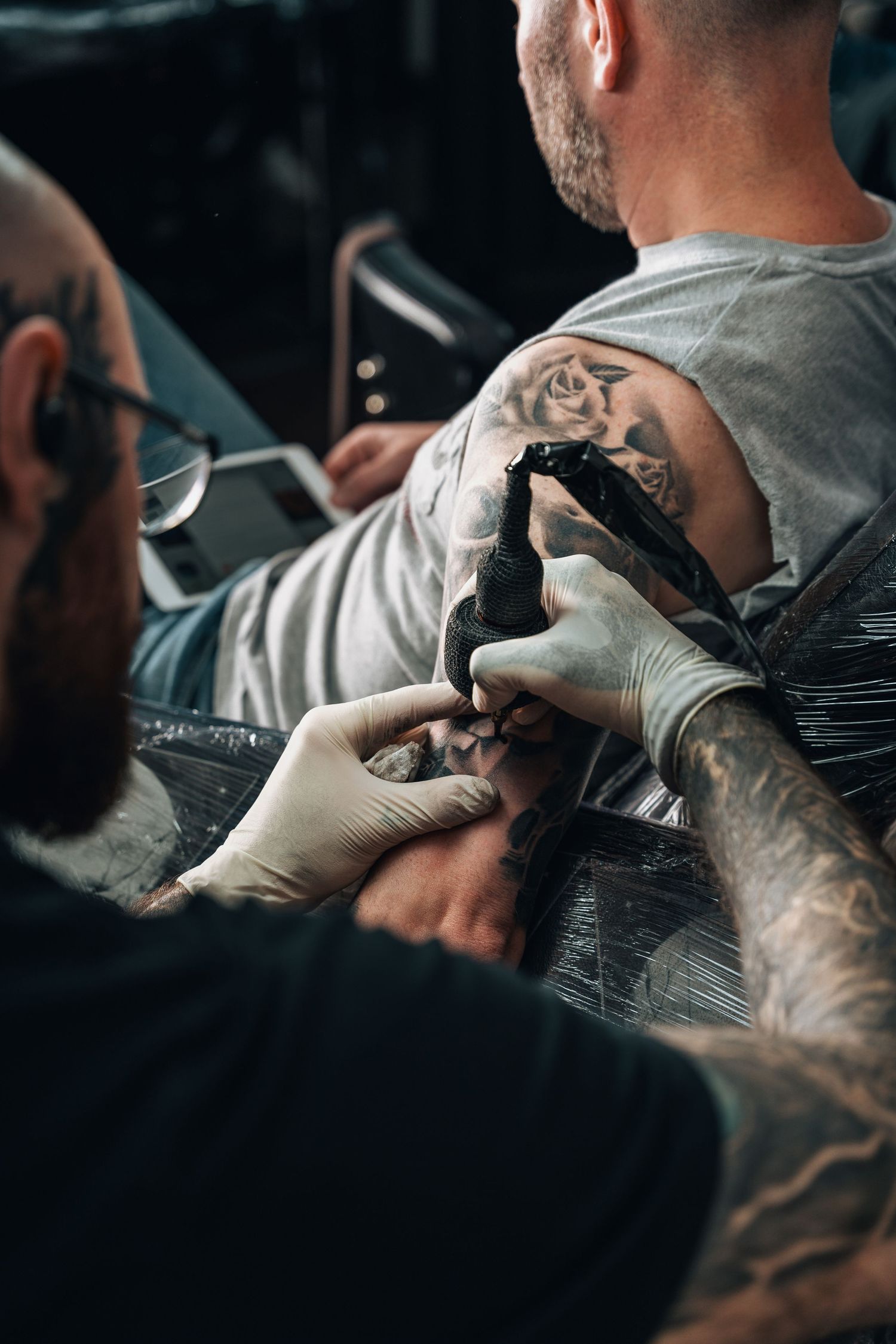
Black and grey work is built from black ink diluted into a range of greys. It heals with a soft, photographic quality, holds its contrast well over time, and forgives sun exposure better than any other approach, though forgiving is not the same as immune. It suits designs built on shading and form: portraits, religious imagery, roses, skulls, and anything that reads through light and shadow.
Color work opens the full palette and a different set of trade-offs. Pigments sit under your natural skin tone and read through it, so the same red looks different on different skin. Bright tones soften fastest in the sun. Color sessions can run longer because packing pigment evenly takes passes. None of that is an argument against color; it is the honest price of the effect, and plenty of clients pay it gladly.
Choosing by situation
| Your situation | The usual pick | Why |
|---|---|---|
| You work outdoors or spend summers on the water | Black and grey, or color kept bold and dark | Sun is the main enemy of pigment, and black-based work tolerates exposure best. Bold color with strong black underneath is the compromise. |
| You want a portrait or a realistic subject | Black and grey | Realism is traditionally a shading discipline. Skin tones and soft transitions are more forgiving in grey than in full color over time. |
| The design is a bright traditional piece | Color | Classic traditional work is built for color: bold black outlines with saturated fills. The outlines hold the design readable as the color settles. |
| Your skin is deep in tone | Either, with an honest consultation | Pigment reads through skin tone, so some light colors show weakly while black work stays strong. A good artist will test and advise rather than guess. |
| You want the lowest upkeep over decades | Black and grey | Light greys soften, but the structure holds. Color owners should expect the brightest tones to want a refresh sooner. |
| The piece is small and detailed | Neither, at that size | Detail density, not palette, is what fails small tattoos as lines spread with age. Go bigger or simpler first, then argue about color. |
The questions to bring to a consultation
A design consultation at a shop like Ivy Moon Tattoo & Apothecary is where this decision gets made with your actual skin and idea in the room. Three questions do most of the work. How will this look healed, not fresh? Fresh tattoos are bolder than healed ones in every style, and judging by day-one photos misleads people. What will it need in ten years? A straight answer about touch-up expectations separates honest shops from sales pitches. And where does the sun hit it? Placement and palette are one decision, not two.
One more consideration belongs on the table: existing work. If you are building toward a sleeve or a back piece over time, palette consistency matters, and mixing a bright color arm with a moody black and grey plan deserves a conversation now, not at piece four. Artists think in whole canvases even when clients think in single tattoos, and borrowing that view early saves real regret later. It costs nothing to ask about the long plan.
Common questions
Can a black and grey tattoo be colored later?
Often, yes. Color can be added over healed black and grey work, though the result reads moodier than color on fresh skin. The reverse, turning color into black and grey, is harder and less predictable.
Which style costs less?
Neither by rule. Time in the chair drives cost, and a detailed black and grey piece can outrun a simple color one. Ask for an estimate on your specific design at the consultation.
I burn easily and never tan. Does that change the answer?
It strengthens the sun conversation. Fair skin shows color vividly but also shows sun damage vividly, so shaded placements and a sunscreen habit matter more, in either style.
Photos in this guide are representative stock images.
← All guides from Ivy Moon Tattoo & Apothecary← Back to Ivy Moon Tattoo & Apothecary